I’m not sure what’s more telling about their priorities:

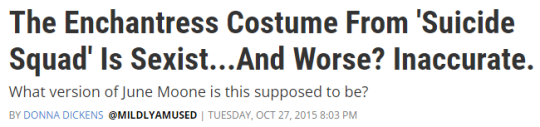
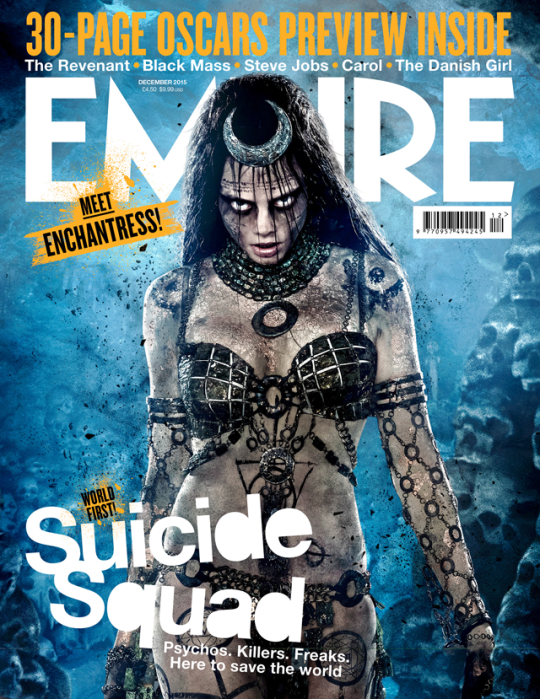
  • That their advertising tries to use the lettering to hide the costume that they’ve designed for her.
  • That one of her costumes is literally her default costume with a shorter top and a cups bra instead of a sports bra.
  • That the two male characters have vastly wider array of looks and features between them than the six female characters do

Oh Herowarz, I wish we could say you tried.

– wincenworks

@olessan submitted:

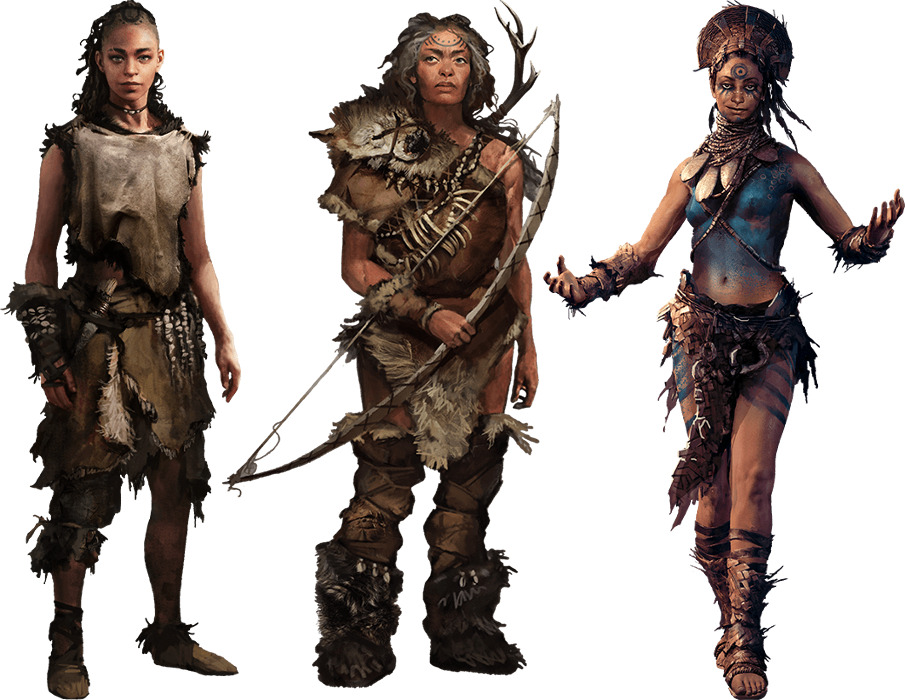
Hi! (o‿o)ノ I was wondering if I could get your thoughts on the designs of Sayla, Jayma and Batari from Far Cry Primal (set in Europe around 10,000BCE); Sayla (a gatherer) and Jayma (a hunter) are allies of the protag Takkar while Batari leads the Izila, one of the opposing tribes (Jayma has a high-res cosplay reference along with several other members of the cast).
Some of the other cast members: Tensay, Karoosh, Wogah

Far Cry Primal was about what I’ve come to expect from mainstream media producing a game set in the pre-Neolithic eras (basically the end of the hunter/gather dynamic’s dominance) – that is to say it was fairly well researched technically but came with a hefty dose of problematic politics at many levels.

Obviously since fur and plant fibre are biodegradable and it is literally a matter of several millennia – we don’t have much evidence of what kind of clothes people from this era wore.  In fact most of the debate over when the earliest clothes were made focuses on the species lice that were in them and the presence or absence of sewing tools.

So that said, the structure of the outfits for Sayla and Jayma are pretty good in that they have a practical purpose and don’t seem to make use of any sophisticated sewing techniques.  There’s also really no inherent problem with people in this era running around nude or near nude… the problem is how all these elements were fitted together.

There is, of course, the obvious issue with them once again dipping into the “evil is sexy” trope with the character who goes topless and is heavily decorated being the one who wants to conquer and burn all those from outside their tribe.

Combined with the other outfits and the overall story and characterization: the general modern day politics and problematic tropes start to become visible.

  • “Good” women keep their decoration modest and subdued, “evil” women decorate themselves and flaunt their sexuality.
  • Men can have a open vest or pants with a crotch (even though those wouldn’t be around for another six or seven thousand years) women get leg wraps to draw attention to their thighs.
  • The primary male antagonist is a mighty warrior who armors himself (as best he can) and gets a noble end, the female protagonist is a manipulator who decorates herself and gets a pretty terrible end. 

And of course, the eccentric shaman character is the one with the darkest skin tones and more African features. Oh dear.

And honestly, there was no reason for Batari to be a rarity for decorating herself, because while people of the era didn’t have jewellers or makeup companies they had access to flowers, ochres, and all manner of other things they could apply to themselves and their clothing as they pleased.

There was a lot of potential here and the art team certainly did the technical research, just it seems other priorities got involved.

– wincenworks
‘Suicide Squad’ concept art shows different looks for Harley Quinn

‘Suicide Squad’ concept art shows different looks for Harley Quinn

‘Suicide Squad’ concept art shows different looks for Harley Quinn

‘Suicide Squad’ concept art shows different looks for Harley Quinn

Could people behind blockbuster adaptations please stop using the whole “it empowers her” talk to explain why they decided to put a female character in a weirdly skimpy outfit? Especially when it’s either unfaithful to the source material or really the part of source material that probably shouldn’t be reproduced.

~Ozzie

Hawley said she got the idea for Harley’s costumes by looking at Instagram accounts of Mexican drug cartels and the attire that rock and roll icons like Debbie Harry, Courtney Love, and Patti Smith wore.

Of course, it’s not really surprising that the final result looks very little like any of those or that various incarnations of Harley Quinn (such as the Arkham games) are not cited as the top reference.  After all.

The real priorities and influences on these designs are pretty obvious, even before David Ayer ranted them out

 – wincenworks

(ht: @prophetofslaughter)

ninanofun submitted:

Hey!

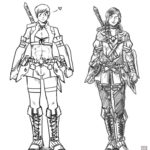
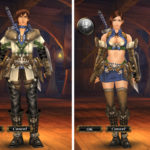
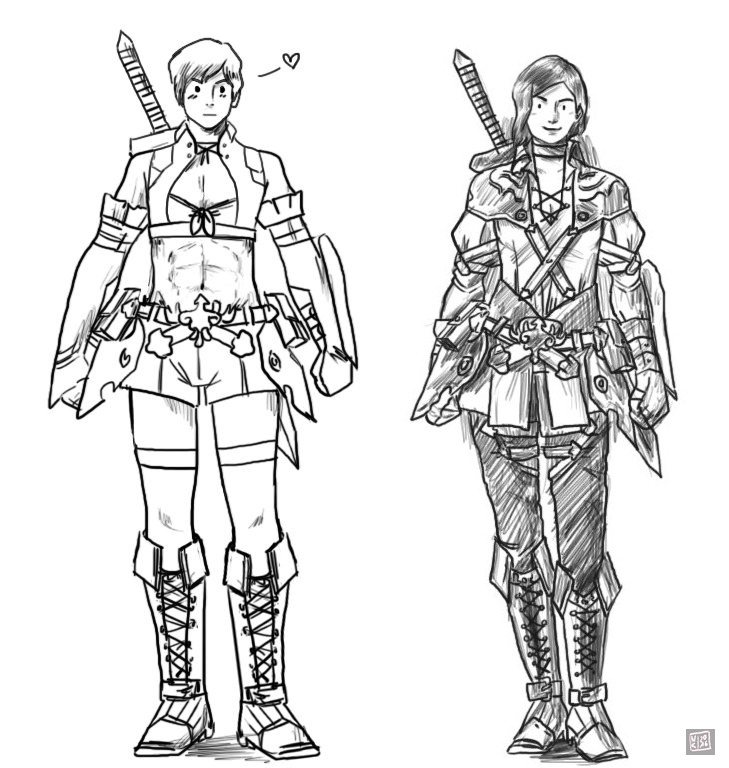
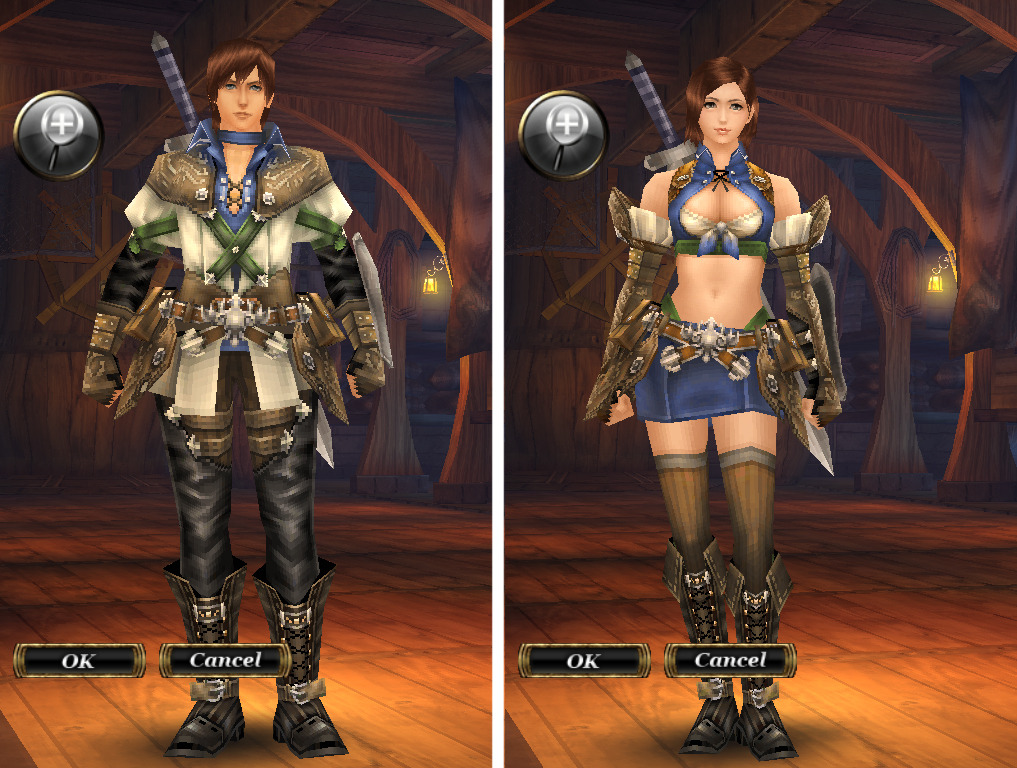
I really wanted to do a quick redraw of the two characters from “Aurcus Online” (original post here), first the male one in the obviously empowering outfit and then the female one with more appropriate attire for combat.

What amazes me the most about this is that the male outfit is actually pretty gender neutral and doesn’t look weird on the woman, at all. You’d probably just make the collar a little smaller for a more “feminine” look and choose different boots for a lady with her body shape (like I did), but that’s it. So why on earth would you invest more precious time into developing a different version of this outfit? The “male” one even shows cleavage! Game designers never cease to confuse me.

Wonderful and empowered submission, thank you! Very much in the vein of those experiments @costumecommunityservice did way back.

I am honestly as baffled as you for why so many video game developers design separate costumes for the same character/class depending on gender instead of slightly readjusting one outfit. Somehow doing extra work specifically to alienate half of potential audience is good business practice, because… sex sells

Yet whenever it’s more convenient, a completely opposite rhetoric is used to justify lack of women in a game.
So yeah, depending on which way the creators want to keep gaming cootie-free, female characters either have a separate budget for making them explicitly different (i.e. more sexualized) than male ones or they are too hard to render so there won’t be any. Either way, women = deviation from the norm = extra work.

~Ozzie

more about double standards | more about costume design

Gender is messier than a singular point on a two-dimensional line

Gender is messier than a singular point on a two-dimensional line