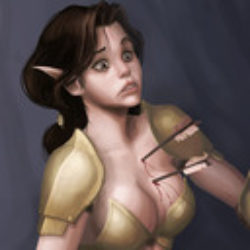
If you like Return Of The Jedi but hate the Ewoks, you understand feminist criticism

If you like Return Of The Jedi but hate the Ewoks, you understand feminist criticism

Not only does this article have a brilliant title, it also explains very well the false dychotomy of feminist media criticism.

Notable quotes:

We’ve fallen into an all-or-nothing rut with feminist criticism lately. Battle lines are immediately drawn between movies that are “feminist” (i.e. “good”) and “sexist” (i.e. “bad”). And that simplistic breakdown is hurting our ability to actually talk about this stuff.

Feminist criticism isn’t about ripping something to shreds or making others feel guilty for liking it. It’s simply about pointing out a specific creative weakness and then taking that a step further to explain the real-world social ramifications of that weakness, all in the hopes of dissuading future filmmakers from making the same mistake.

I dedicate this article to every single person who ever implied that by criticizing female character designs, we’re apparently disapproving of the whole product those characters are featured in*. 

Cause, again:
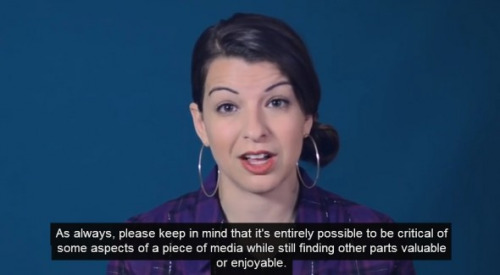
image

~Ozzie

*Sometimes we do, but it takes some special levels of terribad to make us write off the whole product, not only its treatment of female characters.

Brought to our attention by superheroineworld (thank you so much for linking it in a reblog!)

This video sums up pretty damn well why any sort of “makes sense in context” justification for absurd and creepy things in fiction (like, say, bikini armors) is invalid by default.

Quotes worth highlighting:

Writers routinely alter the rules to suit their interests and the needs of their story. So, in the world outside of the diegesis, in our world, only the implications and impact of that fiction actually matter.

It’s basically a circular argument to expect that the fictional rules created specifically for the narrative will shield the narrative from being criticized on the meta level.

Criticism of a creative work is, ultimately, criticism of the decisions that people made when they were putting it together.

Which is also why “you’re slut-shaming that character" is a fail at responding to criticism. Characters are fictional constructs with no agency and the “choices” they make can be blamed solely on their creators.

You guys might have noticed, but around half of the Female Armor Rhetoric Bingo is made from Thermian arguments. That’s how popular this circular logic is among skimpy armor defenders. And I’m glad we now have this video to explain why it doesn’t work.

~Ozzie

more about rhetoric on BABD

sparklewoods:

*sigh*

(from Feudalism II online Flash game)

Female characters displayed, from left to right:

  • Selena, Princess of the Great Trade Republic (next to the Lord)
  • Elizabeth, Priest of Order of Holy Cross (next to the Bishop)
  • Olga, the major Druid of Forest Lands (next to the Chieftan)
  • Niora, Mistress of the East Empire (next to the Shogun)
  • Inga, Major Shaman of the Black Horde (next to the Khan)
  • Diana, Secret Assassin of the South Desert (next to the Ruler)

So apparently in this bizarre world populated exclusively with different types of white people and where you are either trying to conquer the world for yourself or your male counterpart.

To top it all off, the gameplay is a budget/flash version of Mount & Blade: Warband – a game with excellent gender representation.

– wincenworks