



The hilarious front line in the tragic war against ridiculous female armor
The Nerdwriter’s video is primarily about the infamous ShirtGate incident, but the same analysis applies to so many people who smugly post familiar rhetoric regarding the depictions of female characters, declaring themselves right and others wrong often based off nothing more than that declaration.
Innuendo Studios (Ian Danskin) also did an in depth video series about those who are angry at the existence of criticism, specifically about the harassment that Anita Sarkeesian has endured since Tropes vs Women in Video Games took off. If you haven’t seen it, here’s the whole series.
Please feel free to direct Angry Jacks to any of our posts or tags (eg agency, double standards, rhetoric, etc) and to seek help and resources if you’re being harassed. These are all resources we encourage people to share if you find someone posting, tweeting, etc in a misguided manner.
There’s also an interesting TED Talk by James Flynn on one of the reasons you may have trouble talking to people from particular backgrounds. But for now I want to talk about dealing with those who are less confused, less angry and are more smug.
Sadly, plenty of people either just don’t care what’s right and are more interested in maintaining dominance by default than they are about anything that’s ever going to be said. These people are largely the ones who try to seek out and weaponise Angry Jacks, and the ones who manufacture misinformation for their “cause”.
Attempting to engage in meaningful conversation with them, especially in their communities rarely does anything but make them feel that they’ve expanded their platform and hence gotten more “wins”. This is why you often see people like this desperately craving “debates” (winner to be decided by them or their friends, based off what they wanted to be true from the start).
So, if you’ve tagged us in to a conversation and hoped we’d join in – please understand that we haven’t got anything to say that wouldn’t be wasted on that audience. Everything we could say to them has been said, usually many times. This is the Internet after all.
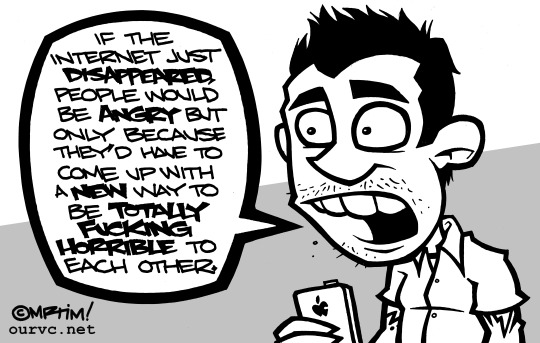
If anything, they will simply interpret a specific response from us as an opportunity to try to hijack our platform and boost their audience, or simply assert that they’re our nemesis and thus instantly important.
Ultimately, that’s what’s feeding their habit – the search for bigger audiences, bigger wins and more validation. If they can’t get that, they take joy in knowing they’re wasting time that could be spent working on problems in a more general, helpful sense (especially if they have nothing else to do).
They won’t be getting a direct answer from us.Though we’re going to continue building commentary, resources and information on all the general issues around today and new ones as they arise and to call out key figures who actually already have high profiles and big influence.
We’re also going to continue to support others who do the same and hope that eventually social media platforms like Tumblr, Twitter, etc will start taking harassment seriously.
The important thing to understand about these people though is, that not only can’t they be persuaded (without having a deep personal change of their own), but they can’t advance or provide anything useful either.
By declaring victory for simply existing and refusing to consider any hypothetical or viewpoint other than their own, they’re inherently limiting their thinking, their contributions and themselves. By not even taking the time to understand before responding, they’re creating a no benefit scenario:
On top of all this, they are incredibly prone to giving their money away to people who either just don’t deliver, or discover there was never anything to deliver. They also tend to find themselves limited to a very small range of supporters and options in terms of projects.
This is what happens when you choose harassment as your primary means of communication and dive deep into the No True Scotsman Fallacy.
So, while we do encourage you to call out people you see spreading harmful misinformation, if their response to that is to smugly reply with claims of victory and nonsense – remember what they’re seeking is equal parts maintaining the status quo and personal validation.
They’re also seeking to antagonize others simply because without some sort of scandal (or more commonly a faux scandal based on misinformation) to expand their audience, their default status is well…
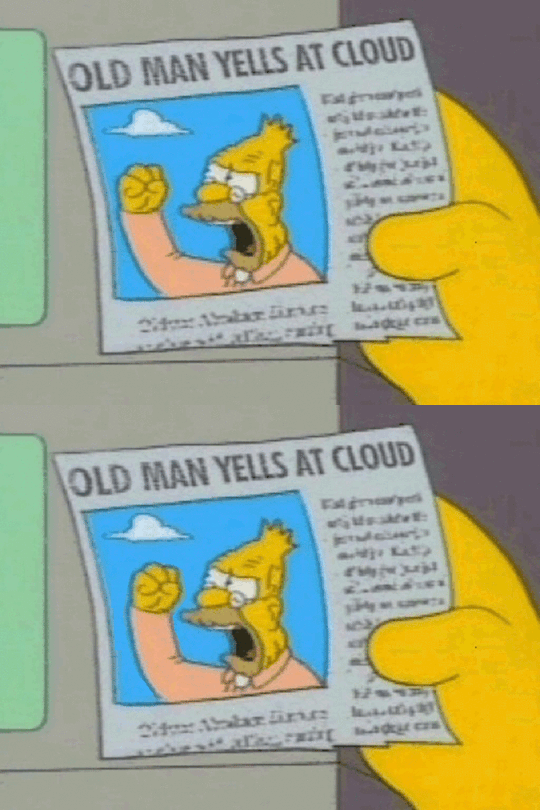
Actually that’s not fair, Abraham Simpson III is far too good a person to be in that crowd. Sorry about that, Abe.
– wincenworks


You play Scarlet Witch, I’m a comic book person so I’m familiar with the character. The character in the films not wearing the outfit I was accustomed to. Is it true you were told right away that you didn’t have to worry about that?
Sad thing Gal Gadot was not told a similar thing when they cast her as Wonder Woman…
~Ozzie
Finished my Saizo sketch! I know he’s not the most popular FE:if character but.. he’s.. my husband so.. too bad >_>
Will be a print for Fanime, AX, Otakon etc. Hope there are other saizo fans out there TuT
See, why isn’t Fire Emblem leading with this kind of imagery? Letting men know the game is has empowered male figures like Saizo in it?
Thank goodness for fans who understand the true appeal of the games.
– wincenworks


High heels are like bikini battle armor. In the realm of fashion, they are helpful because of the way they draw the eye and shape the visual impression of the leg. High heels lengthen the leg, draw the eye up, and highlight the shape of the butt (and more). However, with long term use, they are very hard on the joints (ankles, knees, and hips) and can lead to long term damage.
I know there are people out there who will argue that catsuits, spandex, bikinis, and high heels are practical combat gear for women. Some of them are very well-meaning, some of them are women who buy into it. You’ve probably seen some of them on this site. They’re the ones who take the stock photographs of female martial artists doing (slightly awkward looking) high kicks in high heels as “YES GIRLY GIRLS CAN FIGHT TOO!”. Well, they certainly can but not in high heels. (I applaud the women who can do full extension sidekicks in high heels though! What flexibility! Much balance! Incredible skill! A woman who can do a high kick in high heels is a badass. It’s a testament to their mastery of their body though, not high heel combat viability.)
High heels tip the body forward, putting all the weight on the balls of the feet. If you’ve ever walked around in high heels, then you know finding your balance can be tricky (especially on slick surfaces) and running is mostly out. (You can, it’s just awkward.) The original design for high heels was 14th/15th riding boots when they were a men’s fashion choice. They were never designed for walking on land.
My personal problem with the emphasis on high heels and women’s fashion for female combat oriented characters is the emphasis on visual beauty over practicality and professionalism or any respect for the problems created by reality whatsoever
When it comes to clothing, how you dress your character does actually matter. If a creator or artist approaches their female character with the belief that women don’t fight anyway, so further sexualization of them through their clothing doesn’t matter in the grand scheme of things then they are actively contributing to the dehumanization of that character and upholding that ideal that women fighting at all (much less on an even plane with men) is a fantasy. (The reality is women all over the world do fight, do take on dangerous jobs in various shapes, sizes, and personalities.)
Why? Because it prioritizes emphasis on their appearance to the outside observer over the concerns of the reality they are facing. Whoever put together their outfit was thinking primarily about how they’d be perceived not on practical choices of what they’d choose to wear for traipsing through a sewer. When I think about sewers, peep toe shoes, skinny jeans, and spaghetti straps don’t exactly come to mind first as preferred spelunking wear. Galoshes, raincoats, and pants that repel moisture, yeah. Clothes from the $5 bin I don’t mind throwing out after, sure. My Coach bag and (if I owned any) $400 Jimmy Choos? Hell, no.
A character doesn’t become more badass by ignoring the physical constraints and dangers of the world around them. They just look more stupid. The required level of suspension of disbelief is higher for these characters than their male counterparts.
Now, male artists do this for male characters too. The problem is, of course, that you can actually make a case for fighting in biker boots, a loose leather jacket, and jeans. That’s actually practical street combat wear. Leather jackets work as makeshift armor, they can absorb a fair amount of impact. Biker boots are thick, made of leather, protect the shins, and they’re designed to take impact. They armor the foot. Loose men’s jeans are practical, provide freedom of movement, and they’re durable against friction burns. They survive longer and they’re thicker than other kinds of pants. So, when Steven Stallone turns to the camera in a goofy 80s action movie and says “You don’t need to get fancy, lady.” He’s actually right. You don’t.
However, if you have Black Widow do the same in a catsuit, high heels, or even just skinny jeans, a tight fitting leather jacket, a very nice red satin shirt that exposes her breasts, and heavy makeup, it’s not exactly comparable in impact. (One of the nice things about The Winter Soldier was how practically they had her dressed when wearing civvies.) 1) Because she already is dressed fancy and 2) her clothing isn’t any more practical to the situation than the person she’s bitching out.
Plenty of Urban Fantasy protagonists, super heroines, and movie characters do this. I’m not picking on Black Widow, but she’s getting passed around a lot. Buffy did this all the time and it’s part of why I couldn’t take her seriously (especially in the early seasons). Going down into the sewers in a satin pink spaghetti strap, a mini skirt, and matching sandals. Why? Because she likes sacrificing $100 to $200 in clothing every day. Single parent home, pushing minimal income, constantly complaining about her allowance, while burning a metric shit ton on clothing every single week. How is she affording that? The answer is she’s not. The clothing just pops out of the snow, like daisies. The same can be said of the female protagonists on The Vampire Diaries.
On the other hand, I give Charmed a pass because they constantly acknowledge how hard demon fighting is on their clothing. They try to fix their clothes with magic, they have to come up with money to repair the manor, they have to buy new clothes, they think about trading in their old styles for more practical ones and decide against it. The daily rigor, the stress on their wallets, the general mundane realities of every day life are expressed in the choices and habits the characters make and maintain. If they have time before facing a given crisis, you’ll even see them go run to change. Their clothing isn’t practical, but the show at least acknowledges that and uses it to humanize their struggles with being women and demon hunting witches.
The big problem with style and fashion is they help contribute to the idea that women primarily exist in fiction (and in real life) to be looked at. They’re decorative first, even when they’re dangerous. If you remove that aspect, men and women will in fact complain.
Yes, both of them.
Women are presented with a cultural idealization of beauty day in and day out, the stereotypes we’re presented with become a part of what we expect to see and may even idealize in ourselves. Recognition of beauty, being admired, is presented as a goal all women (whether or not they can even achieve the standard) should aspire to. Not appearing beautiful is presented as bad by media, unworthy, unable to be loved. Conform to be worthy. For many people, they want both. To fit the cultural ideal of female sexualization while simultaneously rejecting it. It’s wish fulfillment and there’s no shame in it, media has told you you’re entire life that this is what you should want to be.
It doesn’t exist, but you’ll see plenty of people try to make it so anyway like the girls I knew in gym who’d cake on makeup before going out to play basketball or run the mile.
Looks first.
To challenge the stereotypes, you have to recognize them and that may require changing how you see women in media. It’s insidious and, more importantly, not necessarily evil. There’s nothing wrong with wanting to be wanted, to be beautiful, to be recognized. But how a character looks and what they wear should always, always come second to what they need to get their job done.
I try to beat this by thinking about the situation first, instead of character. I construct a character to deal with a situation. With this set up, practicality usually prevails.
I challenge you followers. When you think of a powerful woman, or a dangerous female, what do you think of first?
-Michi
Super comprehensive and informative (if lengthy) post regarding fighting in high heels. A MUST-READ FOR EVERYONE!
Let me just quote the most important paragraph of it (that relates to female hero costume design in general, not just the footwear):
“A character doesn’t become more badass by ignoring the physical constraints and dangers of the world around them. They just look more stupid. The required level of suspension of disbelief is higher for these characters than their male counterparts.”
Finally someone found perfect words for the point that is my answer to all of Female Armor Rhetoric Bingo. Thank you so much, howtofightwrite!
~Ozzie
What time is it? Time to remind everyone of all the arguments why FIGHTING in high heels is a terrible idea!
~Ozzie


