

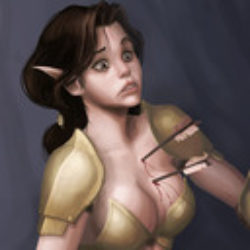
The hilarious front line in the tragic war against ridiculous female armor


The “sissy villain“ is probably the most common gay-coded archetype in popular media but it’s certainly not the only one. It’s popular in a lot of “family friendly” media as it has it’s roots in the “hero’s inadequate friend” trope and doesn’t really require anything overt.
However, the use of coding of pretty much any “alternative” group (who are only “alternative” due to mainstream society’s lack of acceptance) to flag villains in media is very common. Mostly because these people are “othered” by society and hence the audience is assumed to believe these people are not worthy of human compassion.
Varying degrees of LGBT coding in villains in movies is common enough that there are high profile lists of the best and worst. Game Theory did a video on the vilification of LGBT characters in video games. These are only covering the blatant examples (though notably these characters rarely get to have any romance in their lives). They do however, represent a variety of looks and villains beyond the scheming sissy.

An important thing to understand about this kind of coding is that it is not necessarily done with any intentional malice or even awareness of how the audience might read it. That doesn’t make the end result any less harmful, it just means the creators are often not aware of the harm they’re doing.
Sometimes it happens due to casting priorities (the powers that be insist the primary cast be x, y and z so the only room for diversity with decent characterization is villains). Thus denying these groups the chance to be the hero and instead giving the audience the opposite impression.

Sometimes it’s simply the norm to that creator due to them absorbing so much media where regulations or society in general demanded that “deviant” characters be portrayed in a negative light. Particularly if they’re doing a remake of or heavily inspired by something problematic.
Sometimes it’s just overlap of interests (looks associated with body building and/or fashion can easily overlap into softcore porn for gay men). The further from “normal” they look, the more necessary to ensure they are not “one of” the target audience.

Sometimes these unflattering portrayals are celebrated by members of under represented groups. Sometimes, regardless of how horrible or wildly inaccurate they are absorbed audience and lead to the vilification of innocent people. Sometimes completely ridiculous things become coded due to people’s wild imagination.
Once something becomes “coded” then society only accepts it in media if it’s attached to a member of that “other” or there’s some point made about how this is an exception, etc. So if you want to diversify your cast, society wants you to give the undesirable roles to those in the “other”.
Now this is all different to when you make a character deliberately predatory – trying to push their lifestyle onto the protagonist or player. Tropes such as the “depraved homosexual“ (or ”depraved bisexual”) are more confrontational to the presumed straight male cishet audience. Remember: Even completely non-predatory flirting from fictional people can make an alarming number of straight men panic.
HOWEVER a lot of the anxiety that comes with the acknowledgement of people who are not straight white cis men tends to fade immediately if the “other” is clearly completely different, vilified, dehumanized or even inhuman (the Pillar Men being megalomaniac asexual aliens, for example). They also feel better about it if it’s only “bad guys” who are put in awkward positions due to the presence of the “other”.

All of which is to say that pop culture and modern media in general feel that – if something can be interpreted as not a proper part of straight cis society then the place for it is in the “other” which often means as the bad guys, comic relief or both.
– wincenworks
Fetishizing ‘power’ in women characters – having them kicking ass and always being ready with a putdown – isn’t the same as writing them as human beings.
Jack Graham, in Stephen Moffat – A Case For The Prosecution, a guest post on Philip Sandifer’s blog (via linnealurks)
This is applies double if your reasons for making a female character “powerful” are so that she can wear less, thus hopefully generate bigger profits and showcase true originality.
– wincenworks


The problem with crediting “sexing up” the game with increase in sales is that it assumes sex was the only avenue of generating interest – a theory that doesn’t hold up when you consider that some of the biggest selling game types (flight simulators, first person shooters, side scrolling platformers) often don’t include any sexual angle at all.
Back in 1970, Marvel comics experimented with putting Conan the Barbarian in comic format. After the first few issues sales began to decline and the writer, Roy Thomas (who loved Conan), went to Stan Lee (who was indifferent to Conan) for advice. Stan looked at the covers and the sales, and told them to shift away from putting animals on the covers and instead use more humanoid monsters.
They followed Stan’s advice: Sales went up again and the comic continued for twenty-three years. However you don’t see many people campaigning that “Humanoid monsters sell!“ then trying to fit them into all marketing regardless of product or target market. (And sex obviously wasn’t selling Conan, they had bikini damsels after all)

Conan the Barbarian, in his loincloth and flexing his muscles, looked like a poor man’s Tarzan (which had been the popular comic fifty years ago) when battling animals – but when battling humanoid monsters he looked like a more mature fantasy narrative that was new and unique in comics at the time.
The only narrative that sexing/male gazing up a game really provides is “This game is made to cater to the fantasy of straight men.” So if swapping out your old narrative for this one increases interest and sales dramatically – then your old narrative must have been pretty boring.
There have been numerous warrior women in video games over the years. Most of them have been under marketed, relegated to sidelines, ignored or otherwise mishandled due to general fear that they weren’t meeting the “make straight men feel important” factor that modern markets cling to as their sacred idol.
It’s actually not that difficult for creators to make female characters who are sexually attractive without going into bikini armor or other exploitative tropes. I mean, if you give a woman agency, ability and personality – odds are good people will find it sexy.
Essentially the problem is that the gaming industry, and many other mediums, are reluctant to take the risk of incorporating different perspectives and different priorities over “games to reassure straight white men that they’re straight and awesome”.
– wincenworks


