A concise and entertaining summary of how the misconception that video games are supposed to be for boys.  An even more concise summary: It’s the fault of Creepy Marketing Guy.

PBS Games/Show also had a great episode about the Pink Games (ie games for girls) phenomena and how despite introducing elements like character creation but don’t generally receive credit for it.

– wincenworks

More about marketing on BABD

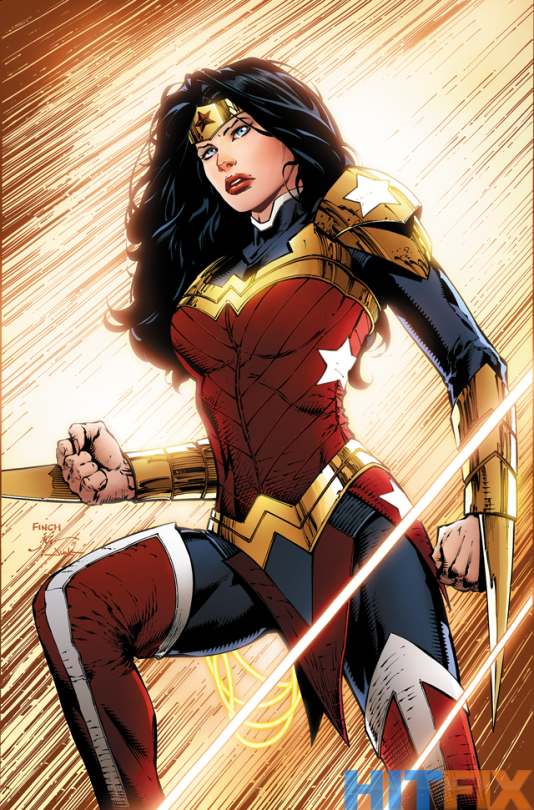
While this video by Movie Bob came out relatively long ago, in anticipation for the first pics of Gal Gadot as Wonder Woman, it still tackles some meaningful issues for our blog: how adding pants and/or covering skin on a female character redesign doesn’t yet fix the problems inherent with her old, more revealing costume and in-story presentation.

That’s why we ridiculed J. Scott Campbell’s outrage over Wonder Woman’s new shoulderpads

pauldrons, but didn’t go so far to praise the covering new costume he hated so much. 

image

It’s an adequate superheroine outfit and has Diana’s iconic elements intact, but its supposedly biggest change, the skin-covering catsuit, seems indeed like an uninspired, colored-in afterthought.

While, as Bob points out in the video, there will always be a crowd unsatisfied with the changes (especially for such a popular character), I say it’s crucial to just PUT AN EFFORT into a redesign. Only then things can begin to work out.

See, for the record, BABD’s favorite re-imaginings of Wonder Woman:

~Ozzie

As Bob said, there’s a lot to unpack and while we’ve seen that it’s certainly possible to cover  female character head-to-toe and still have her be ridiculously sexualized.  I also feel that arbitrary statements like “makes her less like the other two” are at least as responsible for bad re-designs.

Ironically when it comes to characters like Diana, a large part of this is that the comics industry is influenced by unhealthy amounts of nostalgia so instead of doing completely fresh re-designs they tend to insist on homaging the original.

And when the outfit was as ridiculous as Wonder Woman’s original outfit it’s kind of hard to make something that looks credible.  Particularly since people aware of her origins tend to go with “sexy pinup dominatrix” rather than “genuinely intimidating and dominant woman”.

I will say this though, if you really want to take the stance against “modesty” approach and tell people that it should all just be allowed to hang out – there’s someone who should be wearing a lot less than Wonder Woman.  No. Really.

– wincenworks

Star Wars: The Force Awakens’s Captain Phasma, Unmasked

Star Wars: The Force Awakens’s Captain Phasma, Unmasked

Star Wars: The Force Awakens’s Captain Phasma, Unmasked

Star Wars: The Force Awakens’s Captain Phasma, Unmasked

I particularly like how, in this interview about a dress of all things, Gwendoline addresses the reason why Captain Phasma’s armor is so striking.

…normally the kind of female characters that we see in films, we see the way in which they’re made flesh.  We see the outlines of their body. But this is a character who is wearing armor, and as a consequence we are forced to judge her or interact with her… form a relationship on her character and due to her actions.

This is the power that you give characters when you don’t lean on sexualized tropes, objectification and the false idol of “sex sells”.

– wincenworks

(ht: @itsgoodtobeming)

(As well as engineering the video does touch on medical procedures, psychological experiments performed on animals and themes like kidnapping, murder and execution. Also some Nazi imagery and a very brief appearance of a homophobic slur.)

Round 4 sumitted:

Have you seen this? It’s an interesting lecture by Mike Hill about using functional, industrial principles and meaning in your designs to make a world more rich and believable. In the first part of the lecture, he talks about the difference between deeper satisfaction and pleasure buttons, with “The Last of Us” being an example of deeper layered design and “Candy Crush” being an example of instant pleasure button pushing. It’s funny how he stresses the importance to think about how things work and make them believable, since it also perfectly applies to bikini armor.

Bikini armor designs are nothing more than simple, instant pleasure designs. It’s a very simple, lazy form of gratification.To use his words, it’s short term, forgettable and contextless.

In contrast to that: believable, functional, deeper designs of female characters (and their armor) would bring much more depth to games and film and long term happiness and meaning.

I wonder how many bro-ncept artists are watching this lecture and think “yeah yeah I need to make that robot more believable” and then draw a girl in a bikini next to it though…

The video is quite long  but definitely worth sitting through if you’re aspiring towards doing design of any sort.

A key point covered is that if you want people to get immersed and invested in your work then it needs to be internally consistent. You don’t need to be 100% realistic, but you need to consider the message behind design decisions and their relationship with your overall production.

For those who find the encoding section and talking about the chair, there’s further discussion of the same topic at Every Frame A Painting.  But essentially the core message the same is: Everything that appears in a production can either re-enforce the message or detract from it at conscious and subconscious levels.

So, unless your story is primarily about sexy people doing sexy things, odds are good that design decisions to advertise sexual availability shouldn’t be a standard – particularly only for one gender while others are issued with practical attire.

Whether you consciously remember it or not doesn’t really effect the impact, it’s just really more about whether you were looking for it.  You might not notice it, but your brain will.

– wincenworks