The hilarious front line in the tragic war against ridiculous female armor
Tag: video games
Posted on
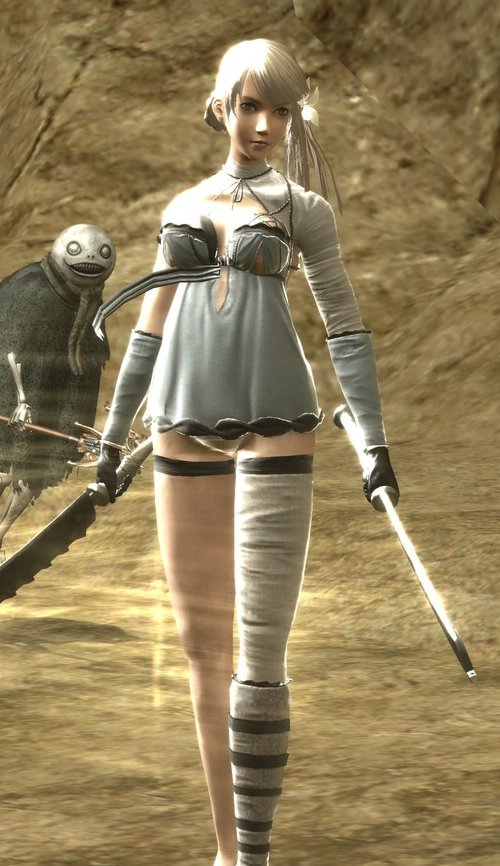
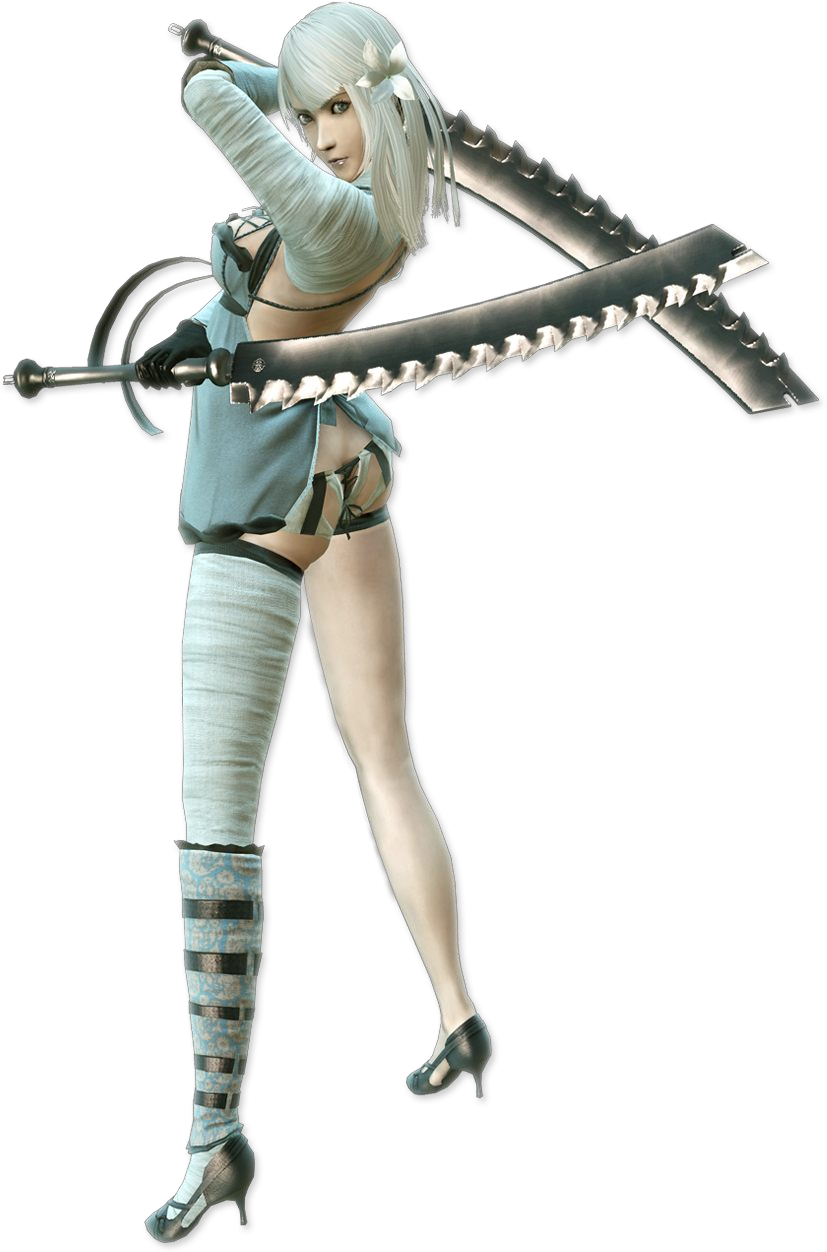
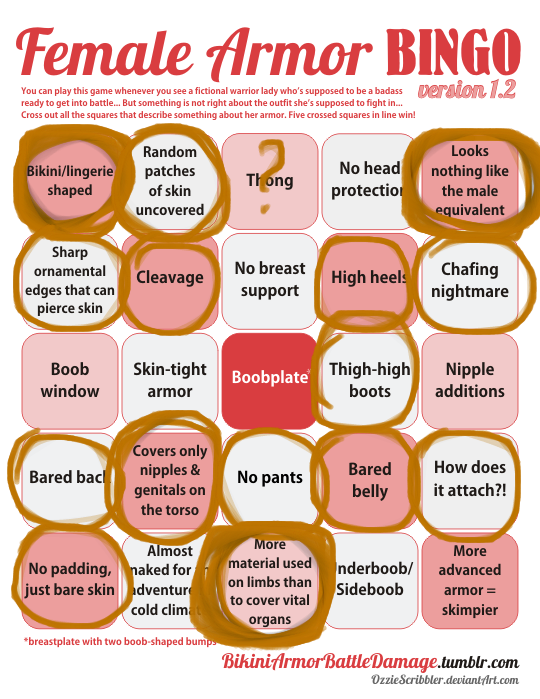
(Half-mark on the thong because it appears she has briefs with little windows to simulate the thong look. Just think, someone had to model that… and the mini underboob windows too.)
We’ve had a few people respond to the Nier Automata post with asks and submissions about the foul mouthed, incredibly violent sidekick from the original Nier game: Kaine. (Trivia: Kaine is one of the very few canon intersex characters in video games, in one version of the game, which adds all kinds of baggage to this outfit and her depiction in general)
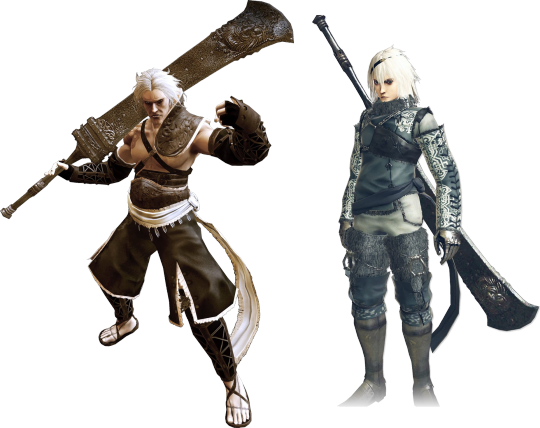
For those interested, this is the hero, Nier… both versions of him (It’s complicated and Kaine is dressed the same in both versions):
For those interested in how this went from being pulp fantasy to a cyberpunk war of androids in couture and VR goggles against alien robots… you can probably guess there is no simple explanation to anything.
Suffice to say though, Yoko Taro’s confession that he just likes putting sexy girls in his games was entirely unsurprising.
So there have been a range of reactions to this, ranging from people celebrating that there is finally an auteur who can be honest about their decisions (rather than assuring us of the validity of breathing through one’s skin) to groans about how unsurprising given Taro’s last game (full size):
But really, this misses the larger conversation: In a medium where the people who are investing millions are understandably concerned about what they’re getting, what kind of decisions get approved and what kind get blocked?
Basically there are various creative decisions which will be green-lit without question (literally any excuse is good enough), but others which are dismissed or allowed a brief moment then cut down.
For such a short sentence, it also carries a lot of unfortunate subtext.
Like the implication that sexualizing female characters is okay, as long as you admit to liking girls/women, as if creator’s sexuality made any difference in this context.
Which also suggests that attraction to girls naturally leads to perpetuating female objectification, even though numerous creative people who are into women somehow manage to make projects without it.
Or just the fact that justifying a very generically sexy female design with “liking girls” in general implies that she represents all girls/women, despite the fact that most women look nothing like her.
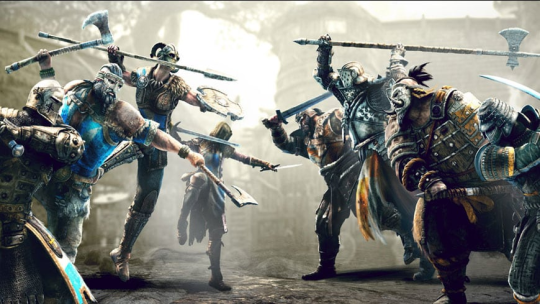
So there has been a lot of talk that For Honor is a perfect example of how to do female armor. Perhaps the best part about disagreeing with this was it meant a bunch of people who follow for unhelpful reasons ended up agreeing with their nemesis, Kotaku, but the second best part is it let me talk about design and signalling.
Disclaimer
For the people rushing to point out that in 50% of the classes the designs are mostly identical across genders and I agree that’s a pretty good. We also tag For Honor as a positive example.
However, that doesn’t mean it doesn’t have flaws and that it’s better to talk about them rather than just rubberstamp it as flawless.
Also I feel it’s important to point out that there’s literally nothing in For Honor that suggests that historical accuracy was even faintly a priority. The designs are mishmash of various elements of history and fantasy based off what the developers thought looked cool. Therefore any arguments about obscure theories in history or archaic standards are pretty much irrelevant.
– wincenworks
Default and Deviation from Default
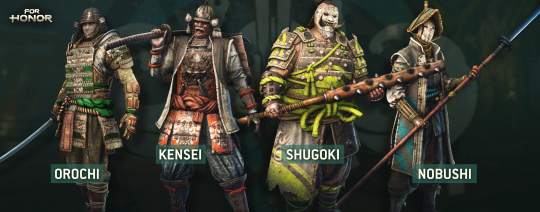
As Lindsay Ellis pointed out in her Smurfette Principle video, media has a long obsession with presenting men as the Default and women as the Deviation from Default. You can see this pretty clearly if you assess the Samurai outfits and look for trends.
The classes available male samurai have:
Expressive masks (2 with helmets, 1 with a decorative topknot)
High profile breastplates
Skirt/fauld plating
The female only class has:
A blank mask with a generic reed hat
A robe folded to remind you there’s cleavage underneath
No plating around the waist (just the shoulders)
This visual language immediately tells the audience that the Nobushi (a term invented for the game) exists outside the Samurai standard classes, one of these things is not like the others, one of these things just doesn’t belong.
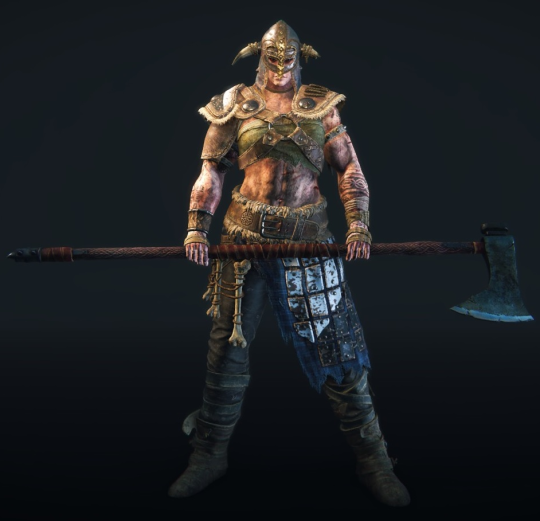
This is also evident when you look at the female raider that her outfit was originally designed with only a male character:
Now, there is an argument going around that this shows they couldn’t have bare breasts because too many vendors would have issues with that, and that this outfit is better than a gold bikini top – that is true.
However, Ubisoft knew that they wouldn’t be able to show bare female breasts from the start – so really what this showcases is that they didn’t consider female characters until they got to a point where their best solution was “just glue some fabric over them” (good luck being impressed by her pecs).
Design Priorities
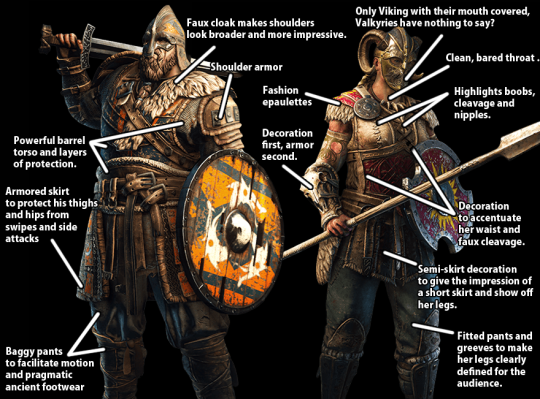
So every faction has two classes that are available to all genders, one male class and one female class. The general trend is that the male class will fit a conventional warrior mode and the female class will be a designed with a different set of priorities in mind, in the Vikings this is particularly obvious when you consider the Valkyries:
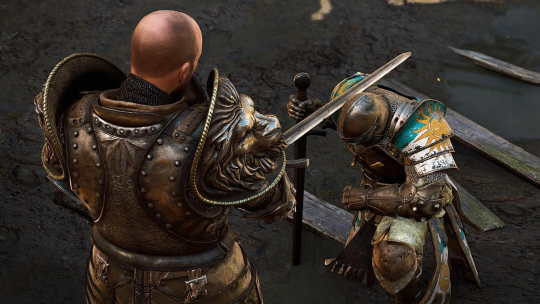
This is also particularly prevalent in the Knights when you consider that their core class (the Wardens) get their armor talked up in a cutscene – making their layered metal armor a defining trait. Knights love their formidable steel armor so much they put steel armor in their steel armor.
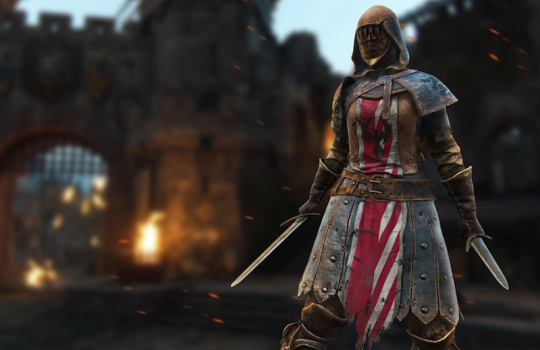
Except for the ladies-only Peacekeepers who only seem to use steel for their masks, greeves and the pushup bras to ensure they have a rounded bust under their organic armor.
Now, if you think this is being picky I assure you that this is generous compared to what would be expected of any professional art director. And Ubisoft is a massive AAA studio who expects those assets to look realistic in HD.
You vs The World
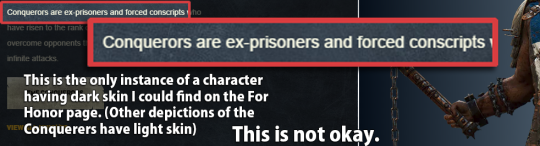
So, with those six classes where you can pick your gender, and the option to change your skin tone (in the classes where you will get to see skin) are still held up as a fix for many of the issues. (In the same way people proposed that Saints Row 4 fixed everything with letting you create a wide range of characters then recreate your character at any point).
The problem with this is if you look at everything For Honor pitches at the world it promotes that the default hero in this game is a light skinned man in a world of light skinned men with a few light skinned women.
What this means is any time you select a woman in the classes where that is an option, or you change the skin tone of your character to something distinctly darker – your choice is the not an act of selecting your place in the game’s world, rather it’s an act of individual rebellion: using the mechanics of the game to oppose the fluff of the game. (Not entirely unlike when you make an impossibly ugly PC in games with conventional character creators and offer a variety of conventionally attractive faces as default, or may a virtuous hero throw bottles at random people).
Conclusion
Ultimately what this means is that while For Honor allows a wide variety of people to represent themselves (cosmetically) in the game, it’s still not signalling to the world that is actually “for everyone”
Rather, it’s signalling that it’s primarily for light skinned cis men, secondly for light skinned cis women and then has options for people of color with brown skin. The reason it’s getting so much celebration is because this is, sadly, a lot more consideration than is generally given.
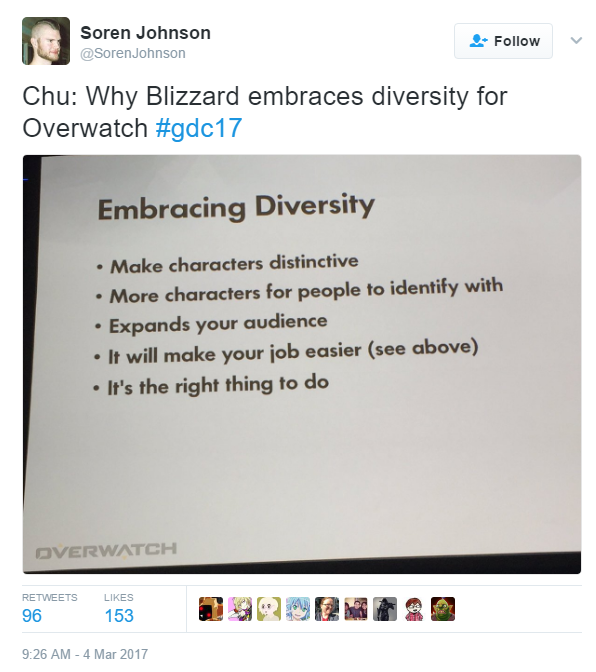
For Honor, like Overwatch, is not being celebrated because it has exception equitable designs (particularly compared to say Dark Souls) and inclusion – but rather because the bar for inclusion in high profile media like AAA games is so low that it should be embarrassing not to easily clear it.
– wincenworks
P.S. If you’re a giant budget developer who is planning to distribute your media to millions of people then you should also look not just to make sure you’re not just setting a default and deviation, but also that you’re not inadvertently reinforcing certain unfortunate stereotypes.
This is by far the least imaginative gladiatrix/ancient female warrior costume we’ve had on BABD. Literal modern bikini/underwear set with normal armor on arms and legs! Even her cuisses are shorter to enhance femoral artery stabbing show more luscious thigh flesh.
One thing that’s particularly funny when comparing the two is that the guy has no upper arm protection, while lady gets big pauldrons andbesagews attached to nothing! Yup, their function as auxiliary armor is so totally not compromised by the lack of breastplate.
~Ozzie
Posted on
Orisa
Many excited readers informed us of the new Overwatch tank character, Orisa, as well as her child prodigy creator, Efi.
One thing we can say from the start is that Orisa is easily the first female-identified character in the game to whom “can I fap to her?” obviously wasn’t a design priority. So there’s no robo-ass or boobs to show and sexualize. That said, she’s a modified battle robot, so unless Blizzard lowered their standards to super sleazy, it was a given she wouldn’t have arbitrary secondary sex characteristics.
That said, Omnics having gender in the first place is pretty complicated issue, storytelling-wise, as some are considered non-gendered machines (Bastion) and other are mechanical people (Zenyatta), which makes it akin to “Why does Goofy wear pants, but Pluto doesn’t?” sort of philosophical problem. Though Orisa’s story, given that Efi converted her from one kind of robot into another, seems to explain her being female quite well.
It’s also nice to see how since the open beta, number of female tanks in the game rose from 0 to 3 out of 6, making it the first currently the only gender-balanced class in Overwatch.
Efi herself being an African girl is good in terms of diversifying cast, though we’re still yet to see a black female character who is also playable.
~Ozzie
If we are to engage in the oddity of gendered robots it’s good that the explanation be something outside of gender roles or excuses for literal objectification of women.
It would however, be even better if they remembered that while it’s important to have diversity in your secondary cast, it’s even more important to have it in your primary lineup. That and robots are not (yet) an audience for your games.